

About me
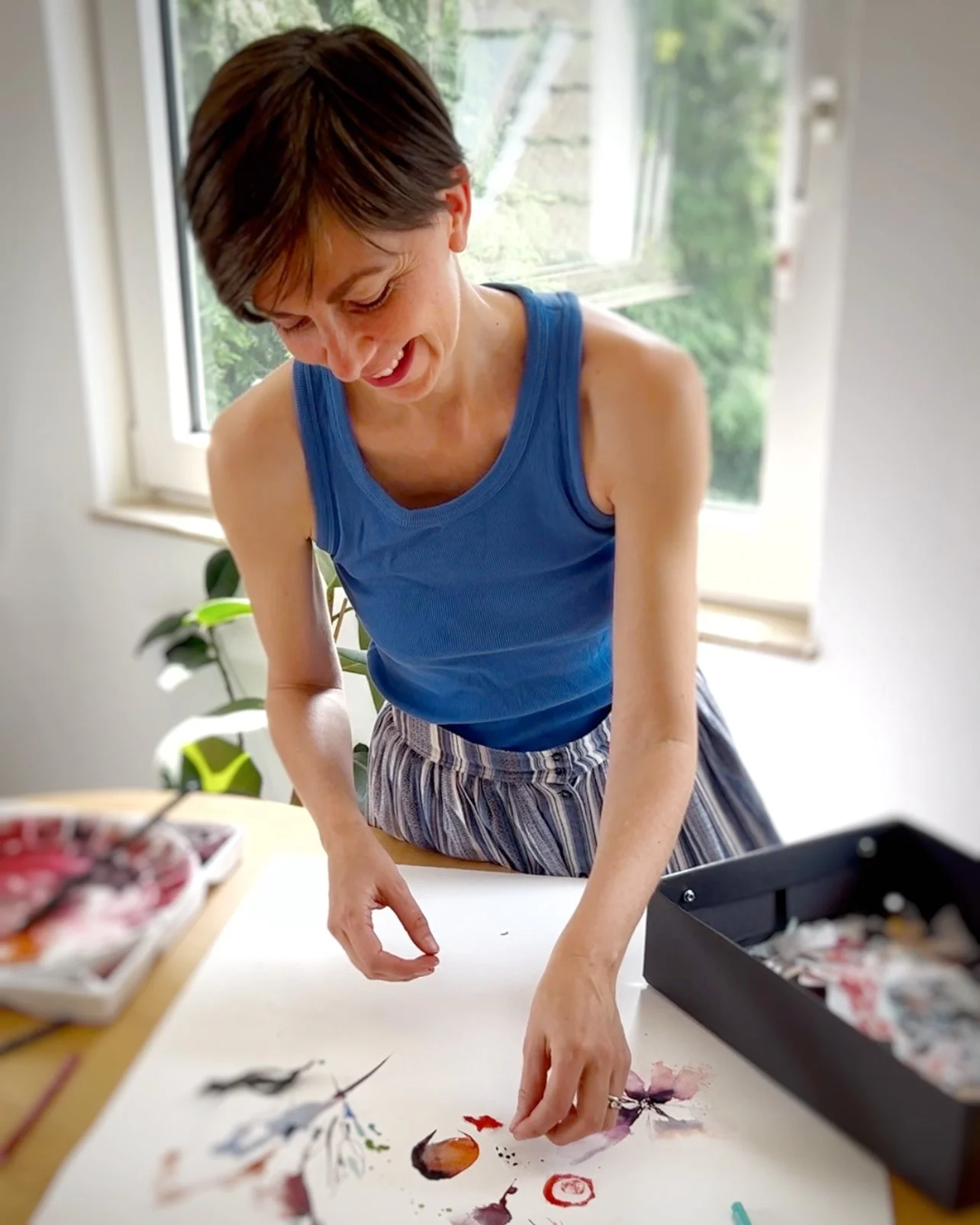
Much of my life has been shaped by looking inward. Not as withdrawal from the world, but as a way of receiving it. I absorb what is around me, then I carry it into my own inner world, where it begins to change shape.
Plants, insects, birds and quiet presences move through my paintings. They feel like recognitions - like inhabitants of a world I have carried for a long time and know since childhood - protective, strange and alive.
As a psychologist, I am drawn to what cannot be seen directly but still shapes everything: fear, tenderness, the ways something fragile survives. Painting became a way for me to approach this without explaining it too quickly. My works often leave a lot unsaid. They make room for what is still becoming, for what is vulnerable without being weak, and for forms that need space around them in order to be felt.
My work is also shaped by other visual worlds that have become part of my life. Through my family’s Korean and Norwegian ties, I live close to cultures of sea, clarity, silence and space. I am drawn to the vastness of Norway, to the force of nature, and to the quiet attention to asymmetry, emptiness and what is only partly said that I have come to love in Korean visual culture. These influences enter my paintings as atmosphere: a sensitivity to empty space, to the life of a single mark, and to what can remain open. This is the place I paint from: an inner world that has never been separate from the world around me.
How I work
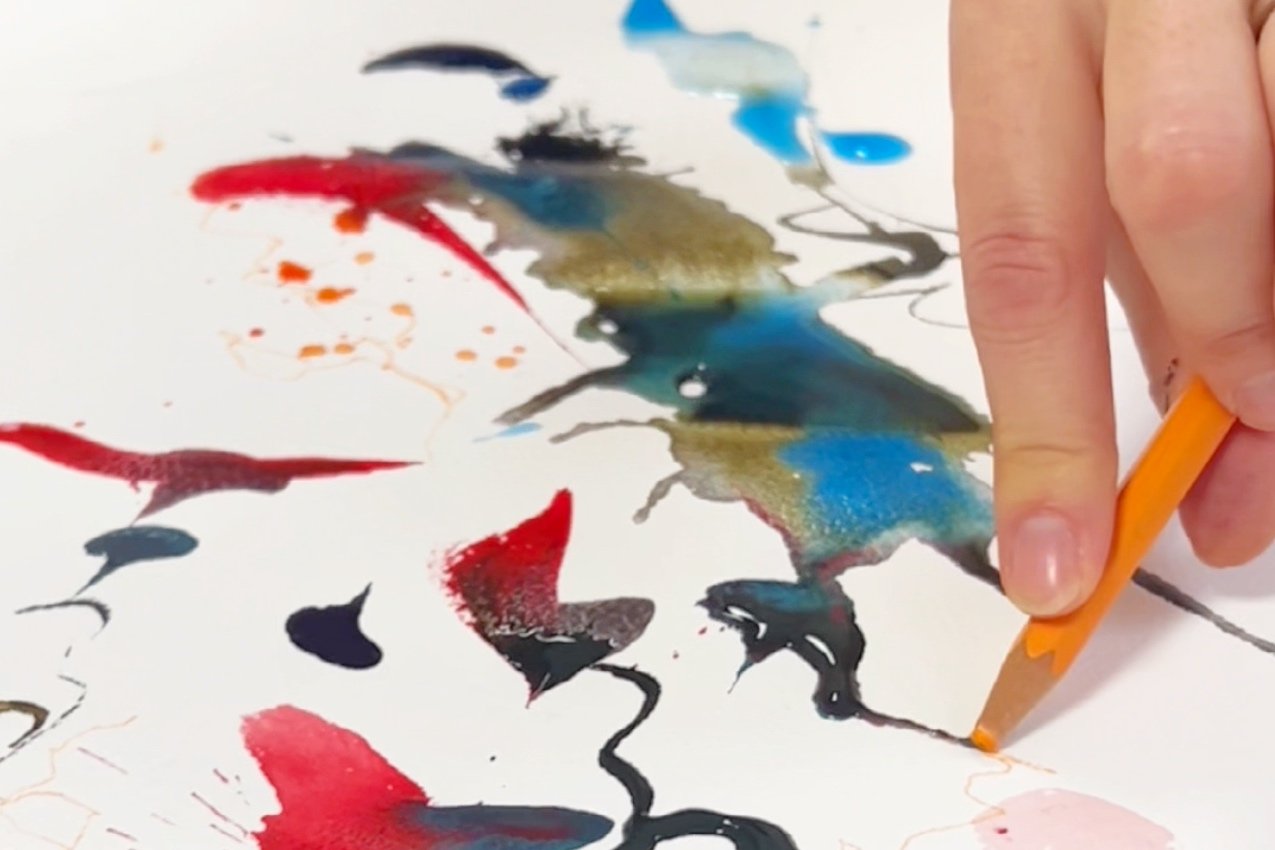
My works on paper are often direct and immediate. Water, pigment and white space leave little room to hide. Empty space is not a blank background in my work, but an active place where a form can breathe, hover and remain partly unresolved. I try to place only what the image truly needs, leaving the paper active rather than filled. There is a quiet trust in the few marks that can carry the whole. The question is rarely whether the painting needs more, but whether it can say more with less.
My panels develop more slowly. Colour is layered, covered, removed and found again. Pigments settle into the surface like sediment; traces remain from earlier decisions, even when they are partly buried. The image is built as much through taking away as through adding, until the surface begins to hold its own history, almost like a landscape formed over time.
Across both, I return to forms that come from the natural world without becoming literal: flowers, birds, fragments, figures, plant-like spaces, things growing below and lifting above. I am interested in the point where something can be recognised, but not fully fixed, where an image keeps its openness without losing its presence.